

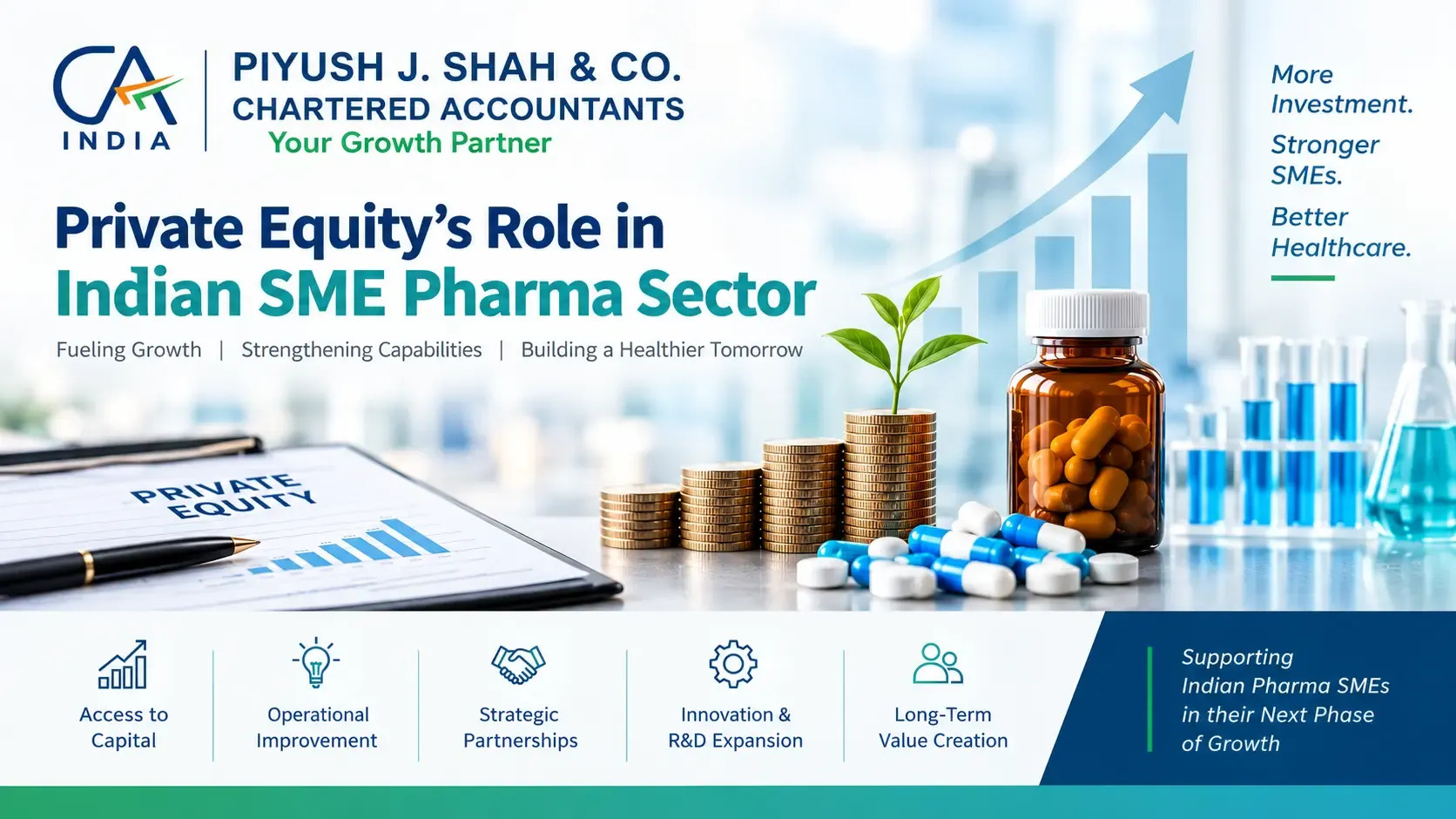
For Indian pharmaceutical SMEs, the question is not only how to fund growth—but how to build a business that is ready for it.
Why private equity matters for pharma SMEs
For a growing pharmaceutical business, the next phase of expansion often calls for more than additional borrowing. A company may need to upgrade its manufacturing facilities, strengthen quality systems, develop new products or reach new markets. Each decision brings financial and operational demands.
Private equity can offer a different route: capital in exchange for an ownership stake, usually alongside an agreed growth plan. For founders, the opportunity is to bring in a partner who can contribute both funding and business discipline. The right fit depends on the company’s priorities, readiness and long-term ambitions.
More than capital: building a stronger business
An investment can help fund capacity, technology and working capital. Just as importantly, an investor may support clearer reporting, a professional management structure and more consistent decision-making. These foundations can help an owner-managed enterprise prepare for scale.
In the pharma sector, growth must sit alongside quality and compliance. A practical investment plan should consider the cost of maintaining standards, training people and documenting processes—not simply the cost of adding production capacity.
KEY TAKEAWAY
The strongest investment case connects growth capital with quality, governance and a credible plan for execution.
What investors may look for
Before investing, a prospective partner is likely to review the business from several angles. Financial performance is only one part of the picture; product concentration, customer relationships, regulatory readiness and management depth can also influence the discussion.
- Financial clarity: Reliable accounts, cash-flow visibility and a clear working-capital cycle.
- Quality of compliance: Documented processes, relevant licences and a culture of quality.
- Commercial resilience: A balanced product mix and sustainable customer relationships
- Governance readiness: Defined responsibilities, management depth and transparent reporting.
Preparing for an investment conversation
Preparation starts well before a term sheet. Founders can begin by bringing financial records, tax filings, statutory registers and key commercial agreements into a consistent, accessible format. A realistic business plan should connect the use of funds with measurable operational milestones.
The commercial terms deserve equal attention. Valuation, ownership dilution, board representation, reserved matters and exit expectations all shape how the partnership will work. Independent financial, legal and tax advice can help founders understand the trade-offs before making a commitment.
A partnership built for sustainable growth
Private equity is not the right answer for every SME. Some businesses may be better served by internal accruals, bank finance or a phased expansion plan. The choice should reflect cash-flow needs, the founders’ appetite for shared ownership and the time horizon for growth.
For a pharma SME that is ready, the value of a partnership lies in aligning capital with capability. A shared view of quality, governance and sustainable expansion can make the investment conversation more meaningful for both founders and investors.


